5 Commercial Cleaning Services Restaurants Should Hire
The best commercial cleaning services for a restaurant split the work in two: specialists for the kitchen and exhaust system, and a janitorial crew for everything guests touch. Kitchen deep cleaning and hood cleaning suit owners and chefs who answer to fire and health inspectors. Nightly janitorial, floor care and day porter service suit managers who want the dining room and restrooms to look right at every seating.
Most owners try to hire one vendor for all of it, and that rarely works. A hood contractor will not mop your dining room, and a janitorial crew should not be climbing onto your roof to degrease a fan. The gaps show up as grease buildup, failed inspections and review comments about the restroom.
This list covers five services in the order most restaurants need them, with what each includes, how often to schedule it and what to ask before you sign. Sacramento Cleaning Services LLC is a locally owned, licensed and insured commercial cleaning company serving Sacramento, Woodland, Rancho Cordova, Folsom, Davis, Roseville and West Sacramento. We point out where our services fit and where you need a specialist.
1. Kitchen deep cleaning
What the work covers
Kitchen deep cleaning is a scheduled, top-to-bottom scrub of the back of house that your closing crew never has time to do. The core job is degreasing cooking equipment and every surface around it . A solid scope includes:
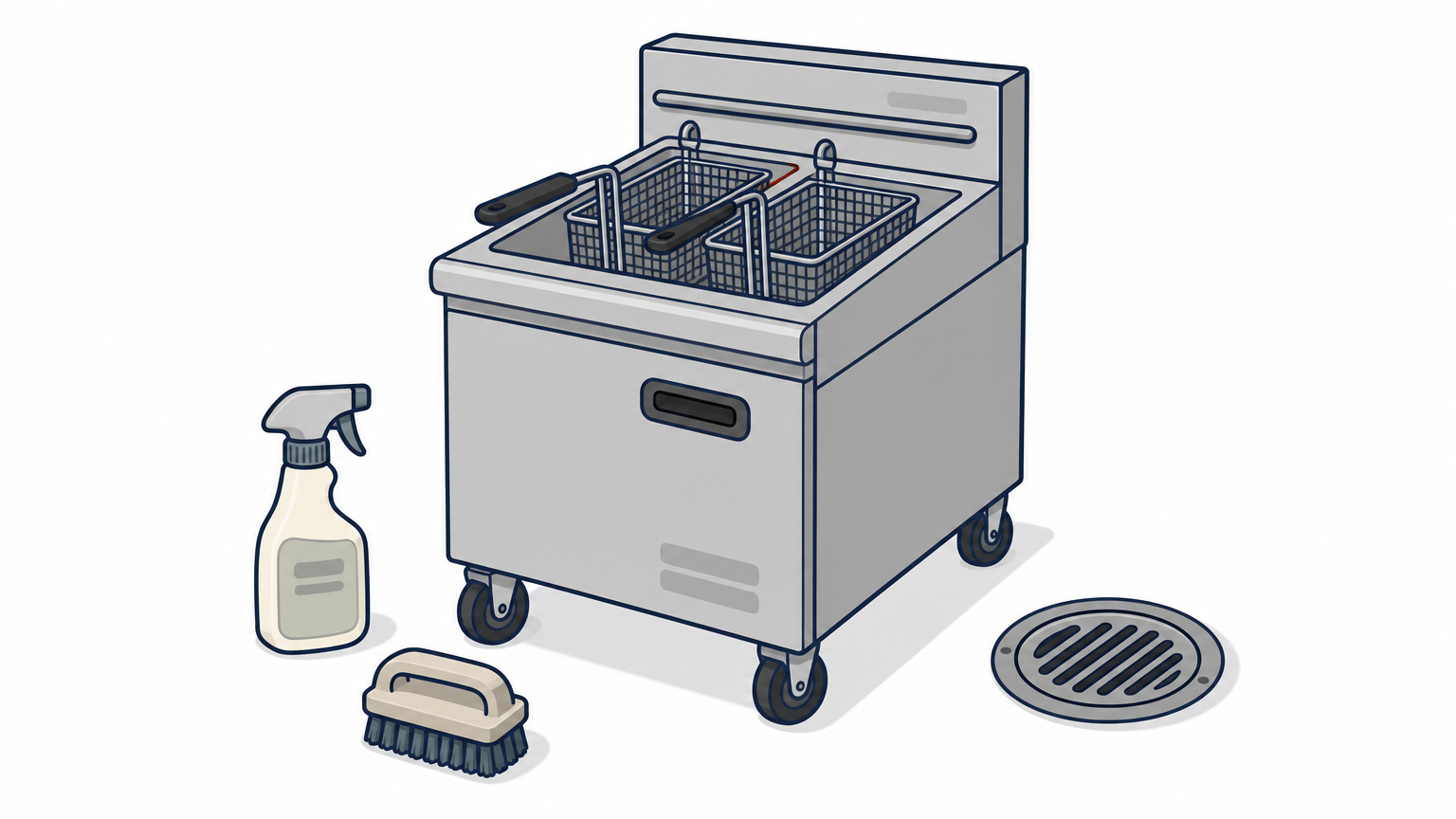
- Fryers, grills, ranges and ovens, cleaned inside and out
- Walls, ceilings and light fixtures behind the line
- Floors and floor drains
- Equipment pulled away from the wall so the grease behind it comes off
A kitchen that passes inspection is one that gets cleaned where nobody looks day to day.
Schedule and what to ask
Busy kitchens often book deep cleans monthly , while a small restaurant with one cooking line may do fine quarterly . The work should happen after close so you open on time. Your county environmental health inspectors judge the results under the California Retail Food Code.
Before hiring, ask these questions:
- Do you use food-safe degreasers on surfaces that touch food?
- Can you give references from other restaurants?
- Do your crews work overnight, and are they insured?
2. Hood and exhaust cleaning
What the work covers
Hood and exhaust cleaning removes grease from the hood, filters, ductwork and rooftop fan, and it is the service that most directly prevents kitchen fires . California's fire code points to the NFPA 96 standard for these systems. This is specialist work. Hire a contractor that cleans the whole system, not just the filters you can see from the floor.
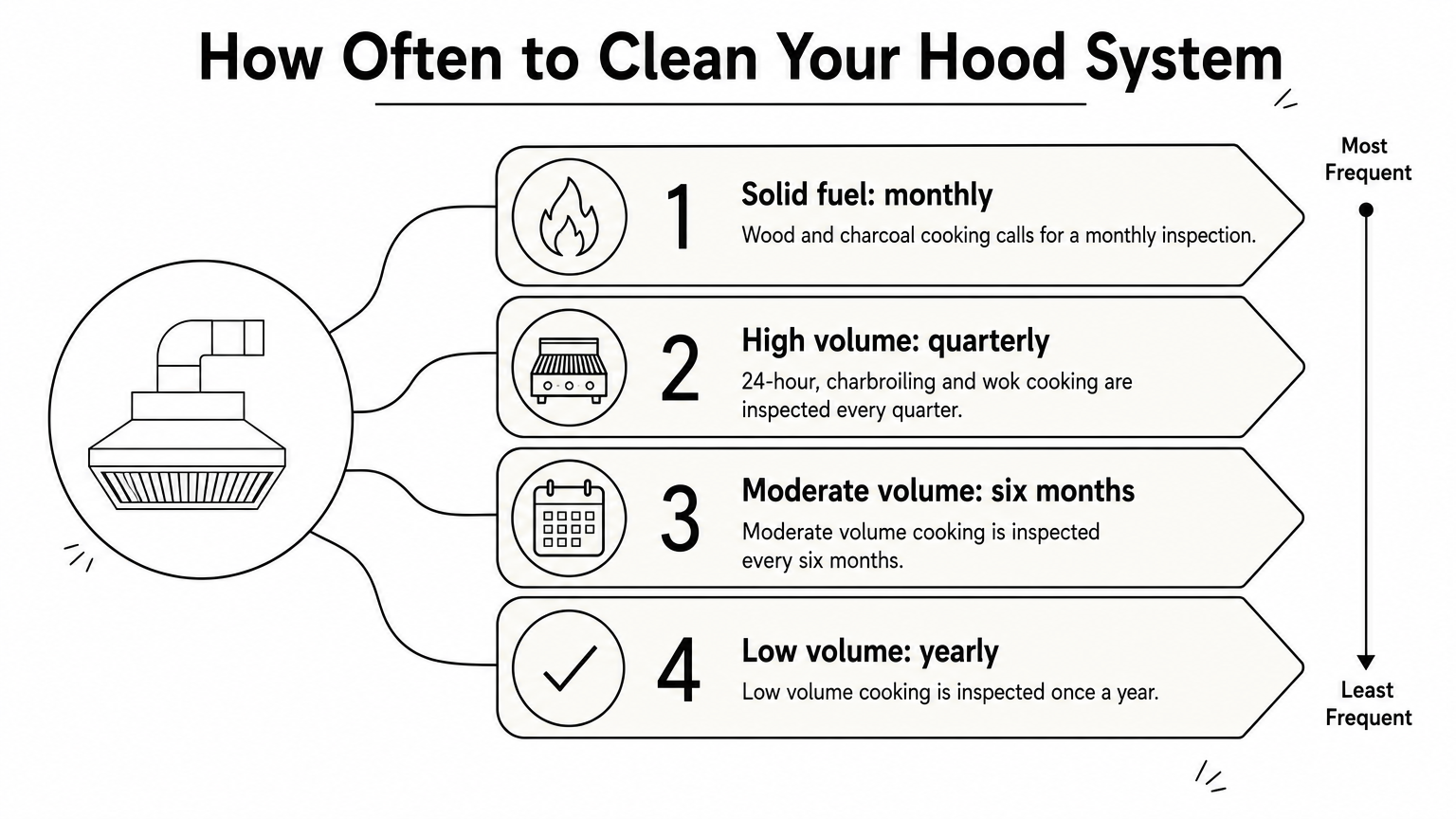
NFPA 96 sets inspection intervals by cooking type:
| Cooking type | Inspection interval |
|---|---|
| Solid fuel (wood, charcoal) | Monthly |
| High volume (24-hour, charbroiling, wok) | Quarterly |
| Moderate volume | Every six months |
| Low volume | Yearly |
Hood cleaning is a fire-safety job first and a cleaning job second.
Schedule and what to ask
Take a restaurant with a charbroiler that runs lunch and dinner. It counts as high volume, so you plan on four visits a year . Your fire inspector may ask for proof, so choose a contractor that leaves photo documentation and a service record.
Ask about roof access, insurance, and how they protect your cooking line and floors during the job.
3. Nightly janitorial for the dining room and restrooms
What the work covers
Nightly janitorial keeps the front of house guest-ready: dining room, restrooms, entry and trash areas . A good crew follows a written checklist so the work is the same every night. Typical tasks:
- Vacuuming and mopping the dining room
- Wiping tables, booths, host stand and door handles
- Restocking and disinfecting restrooms with EPA-approved products
- Emptying and relining trash cans
Guests judge your kitchen by your restrooms, so clean them like it matters.
Schedule and what to ask
Most restaurants need cleaning after every closing . Others use a weekly detailed clean on top of staff wiping. Our janitorial and daily or weekly cleaning services are built for commercial facilities such as grocery stores, clinics and offices. Tell us about your dining room and restrooms when you request an estimate.
Whoever you hire, ask whether the crew is background-checked, since they will hold your keys and alarm code. Also ask how they report missed items.
4. Commercial floor cleaning
What the work covers
Restaurant floors take grease, spills and foot traffic, and daily mopping alone leaves a film in grout lines and corners. Professional floor care goes further. Our commercial floor cleaning uses buffing, stripping, waxing and mopping with modern equipment. Which one you need depends on the surface:
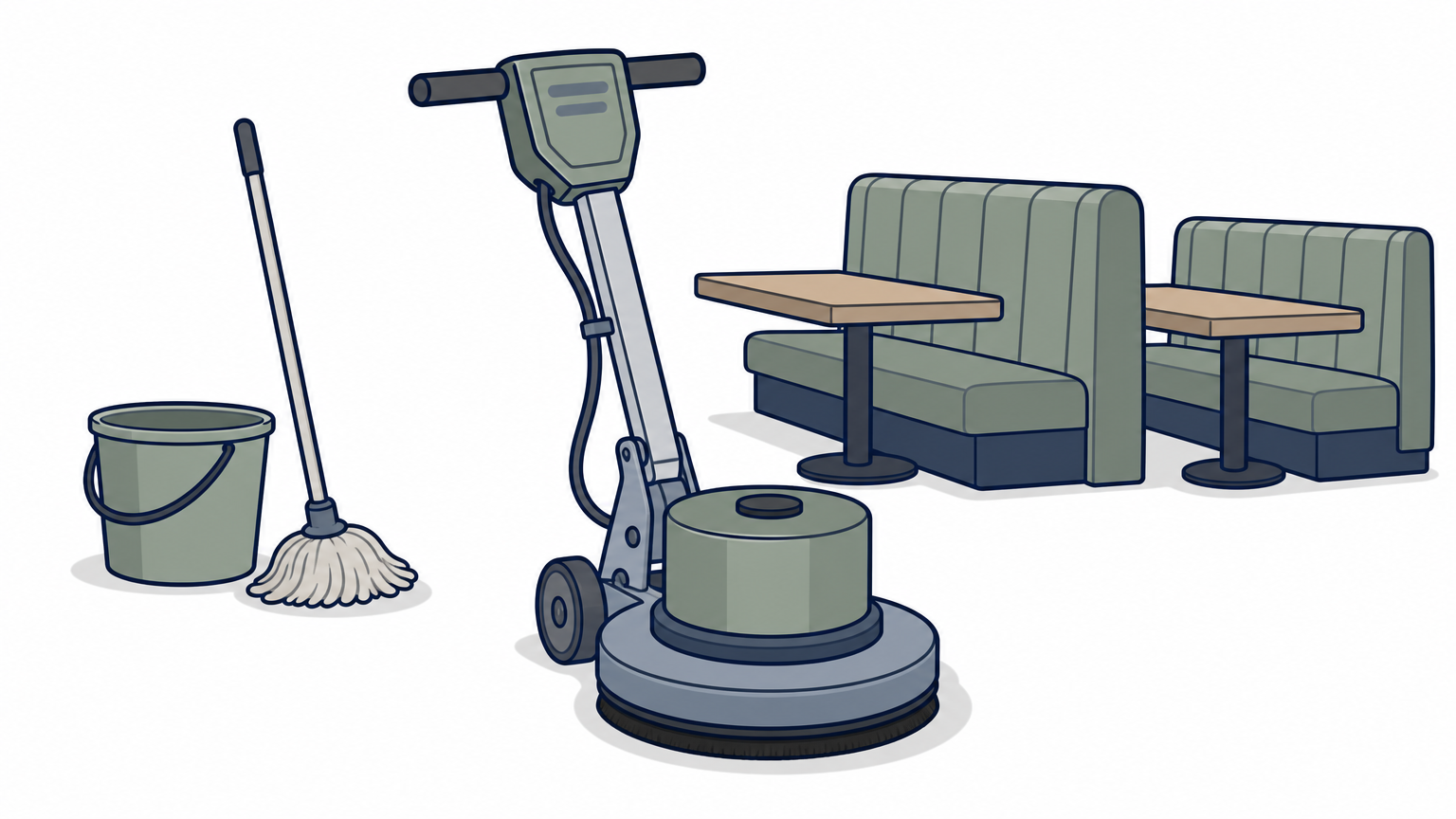
- Sealed or finished floors in the dining room: strip, wax and buff
- Tile and grout in the kitchen: deep scrub, the job a mop can't do
- Entry mats and thresholds: scrub to cut tracked-in dirt
Dirty floors are the first thing guests smell and the last thing owners schedule.
Schedule and what to ask
Floor care is periodic, not nightly. Some restaurants refinish dining room floors a few times a year and scrub kitchen tile more often. A crew should tell you how long the floor stays closed. A slippery finish is a liability , so ask what traction the products leave behind. For a small restaurant, bundling floor work into a nightly contract often costs less than a separate booking.
5. Day porter service
What the work covers
A day porter is a cleaner on site during business hours who handles the messes that happen while you are open. The job is midday restroom checks, spill response, trash runs and entrance upkeep . Our day porter service also covers exterior portering, which matters for patios, parking areas and sidewalks.
- Restroom restocking and wipe-downs during lunch and dinner rushes
- Immediate spill and glass cleanup in the dining room
- Trash removal and patio tidying
- Entry and sidewalk checks
A day porter fixes the dining room at 1 p.m. instead of waiting until closing.
Schedule and what to ask
Porters usually work peak windows , such as a few hours around lunch or dinner, not a full shift. That makes it affordable even for a small restaurant. Our crews are background-checked, which matters when they work around your guests and staff.
Ask what hours are covered and who steps in when the porter is out. Also ask how the porter's tasks are tracked.
Choosing where to start
A restaurant needs two kinds of help: specialists for the kitchen and exhaust system, and a reliable crew for the front of house, floors and midday upkeep. Start with hood cleaning on the right interval, add kitchen deep cleaning, then build the janitorial, floor and porter work around your service hours.
If you want a licensed and insured local team for the front-of-house side, request an estimate from Sacramento Cleaning Services LLC and tell us about your dining room, restrooms and floors.